
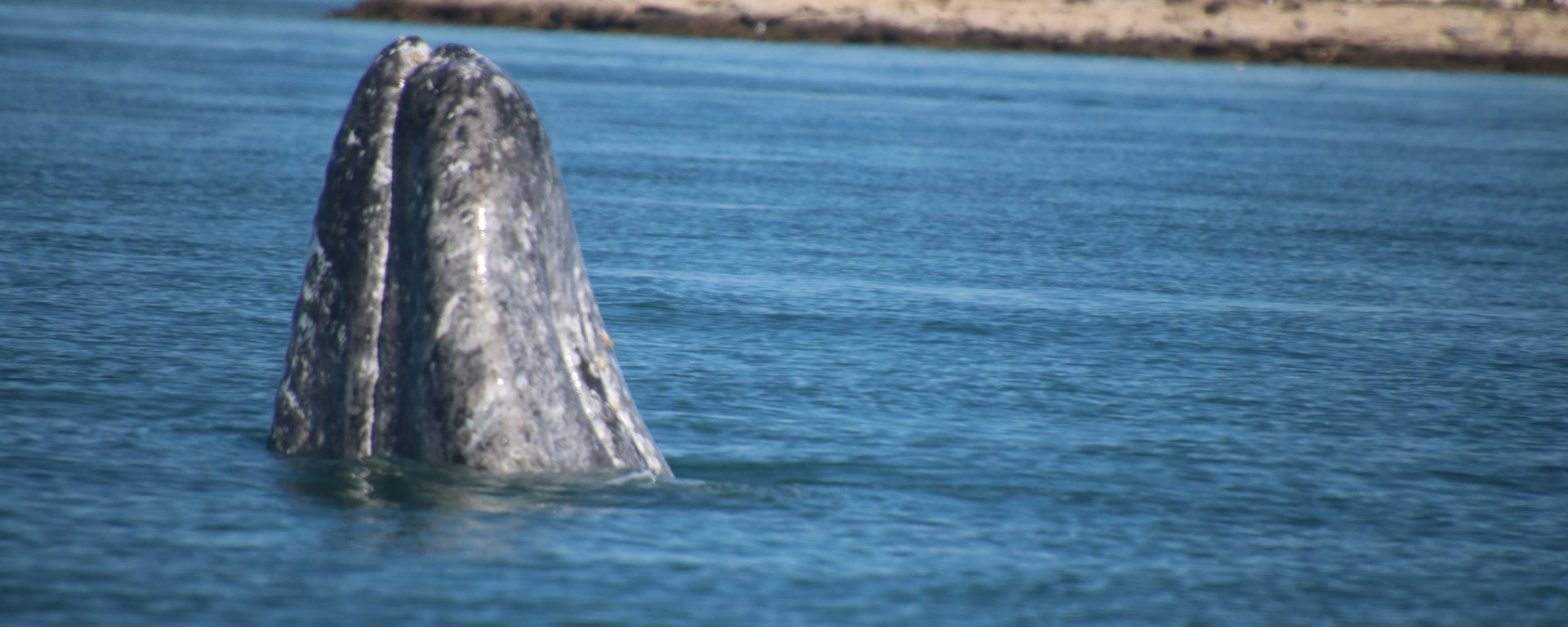
In February 2025, I went whale watching in San Ignacio Lagoon, Baja California Sur, Mexico. There are a few lagoons in Baja California Sur that are known for whale watching. I chose San Ignacio Lagoon for a few reasons:
- smaller lagoon = higher frequency of seeing whales
- more “friendly” whales compared to other lagoons in Baja
- high salinity in the water = more calves in the area = more “friendlies”
In this article I will share details of the trip overall including logistics, packing lists, what to expect, and more so you can plan your best whale watching trip in Baja California Sur.

This Is Not Regular Whale Watching
Before I deep dive into the experience I want to emphasize that this is an entirely different experience than ‘regular’ touristy whale watching. Don’t get me wrong, I’m a big fan of touristy whale watching and I go every year. Regular touristy whale watching, per my definition, is where you’re out on a nice catamaran for a few hours and with luck on your side you’ll see 1 or a few whales and other (awesome) mammals and sea life. It’s fun and beautiful.
I’ve gone enough times that sometimes we have come up short – no whales at all. But still, a fun outing.
The whale watching experience that I did in San Ignacio Lagoon was an immersive 3 day experience dedicated to seeing Pacific Gray Whales. We stayed in eco-friendly cabins right along the water. It felt like we were at a really nice camp. We were in the middle of nowhere surrounded by gorgeous nature and a sea of stars at night.
It took a minute to get there — approximately 9 hours of driving to a remote location + a 2 hour flight — each way.
The remoteness is another aspect that makes whale watching in San Ignacio Lagoon. As I mentioned earlier, it was a trek to get there.
The lagoon is 200 miles (330km) from the closest major airport. There is an airstrip in San Ignacio Lagoon which many people fly into and was our preference as well. Unfortunately with our dates of travel it wasn’t an option.
The lagoon is protected which means they limit the number of boats in the lagoon at a given time as well as the number of people on each boat to approximately 8 guests + 2 crew.
That’s very different than the whale watching I’ve done in California, Hawaii and Australia where there are anywhere from 20-100 people. That said, I have done small group whale watching in southern California on a Zodiac and it was a lot of fun but another key difference is that San Ignacio Lagoon is a hotspot for Pacific Gray Whales.
We were allowed to be on the water for 90 minute intervals (2 safaris per day) and we must have seen about 30 whales each time. A few times, there was 1-3 whales surrounding us simultaneously so I didn’t know where to look.
Whale Species in Baja California Sur
As mentioned, I went to see the Pacific Gray Whales and this article mostly covers that experience. But you will also find Blue whales, Fin whales, Minke whales, Humpback whales, Gray whales, and rarely Sperm whales in Baja California’s coasts – it’s a REALLY big place, as you can see from the map of Mexico, below. But the whale species are spread throughout. Within Baja California certain areas are known for certain species.
Blue Whales. Your best bet is the Sea of Cortez in February and March. There are tours from Loreto.
Fin Whales and Minke Whales are less common but also in the Sea of Cortez in February and March.
Humpback Whales. If you want to see these majestic acrobats, head to Cabo from February to early April.
Pacific Gray Whales. You’ll find Gray whales in (from north to south): Laguna Ojo de Liebre, San Ignacio Lagoon, and Magdalena Bay from late December thru early April (February and March are best).
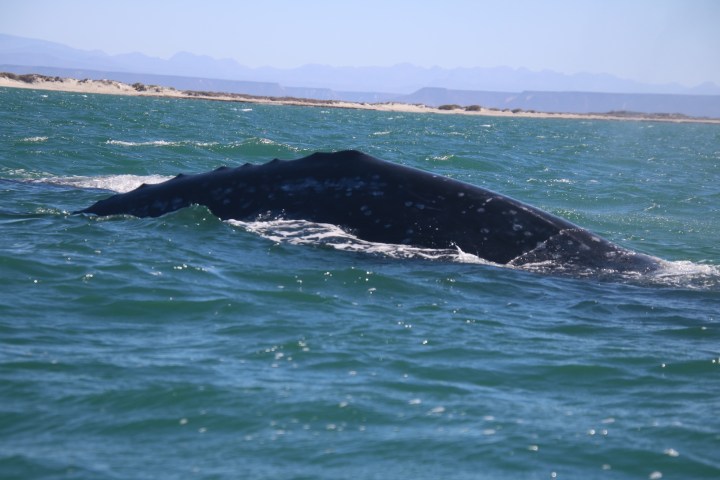
Background on Pacific Gray Whales in San Ignacio Lagoon
You have the potential for unparalleled close encounters. San Ignacio Lagoon, specifically, attracts “friendly” whales. There have been many documented accounts of whales going right up to the pangas and twirling and letting whale watchers touch them – especially moms and calves.
Gray Whales were dubbed “Devilfish” by local fisherman for decades because they would defend themselves against boats – or so the legend went. But Señor Pachico, from one of the original fishing families in San Ignacio Lagoon changed everything. He noticed that the whales were not aggressive at all, rather, they were curious and gentle. And he led the community to change their views on Gray whales. The Pachico Family now runs Pachico”s Ecotours. There are other companies such as Kuyima and Antonio’s Ecotours.
We went with Pachico’s as it was recommended by our friends that we went with. So we didn’t look at others. I have a detailed review about the experience later in the article.
Facts About Pacific Gray Whales
The Pacific Gray Whale migration is the longest mammal migration on Earth — between 10,000-16,000 miles. Pacific Gray whales move from cold Alaska down to warm water in Baja California where pregnant mothers go to give birth. And, as in most things in life, wherever the females are, the males will follow. Males come to mate.
Mothers like the water in San Ignacio Lagoon for a few reasons:
- shallow water = no/rare predators.
- warm water = better for baby. Gray whales are born without blubber to insulate their bodies. The warm water helps.
- Without blubber they need help floating. That’s where the salinity in the water helps.
- All of this means, that Mom can teach baby in peace, so that baby is ready to start the long journey, north, come end of March.
Fun Fact: Pacific Gray Whales are bottom feeders. That means they eat by scooping the ocean floor. They are baleen whales – they do not have teeth – rather, baleen – which are strands of keratin along the inside of their mouth. They filter their preferred cuisine – amphipods – and everything else escapes through the strands of baleen.
What this means is that Pacific Gray Whales are coastal whales. They generally stay close to the coast because it’s easier to access the ocean floor to feed. And that is why sometimes you can see them from shore.
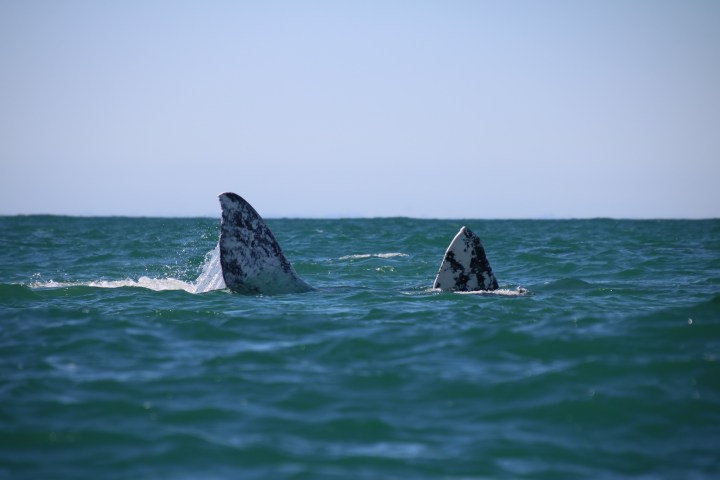
Gray Whale Watching Destinations in Baja California Sur
San Ignacio Lagoon is one of few places where “friendly” gray whale behavior has been observed. Mothers bring their calves to brush up against the whale watching boats. You can literally get within arm’s reach. Many people aspire to kiss a whale.
In addition to San Ignacio Lagoon there are 3 other lagoons in Baja California Sur that are known for gray whale watching and I am going to describe each below. Each has its merits. San Ignacio is popular because it’s a smaller lagoon compared to the others, therefore higher chances of encounters and more moms and babies.
San Ignacio is also the least developed lagoon – you’ll feel like you’re off the grid and definitely off the beaten path. There are few tour operators and they are generally considered more ethical and environmentally conscious.
How We Got There
Traveling from Orange County, California we drove, south, to the US-Mexico border. We used the Cross Border Xpress to cross internally from San Diego directly into the Tijuana Airport. From there we flew to Loreto. Loreto is the closest city with an airport. From Loreto it was a 5.5 hour drive to Pacheco’s Eco Camp.
While Loreto is the biggest city near San Ignacio Lagoon, it’s a small city with limited flights. We spent an extra day in Loreto as our original flight was cancelled and no others were offered the same day.
There are flights from Los Angeles International Airport to Loreto as well. And as I mentioned, San Ignacio Lagoon has an airstrip. The camps will arrange a charter flight from Loreto.
Driving From Loreto To San Ignacio Lagoon
The drive from Loreto to San Ignacio Lagoon was about 5.5 hours along Highway 1. It’s a proper road but it’s pretty windy, no lights, no shoulder, hardly any guard rails, risk of animals on the road and A LOT of pot holes. So I would not recommend driving after dark. There is about a 30 minute – 1 hour section on the way to San Ignacio Lagoon that is a rocky dirt road but it’s not too bad – you just have to go a bit slower depending on your vehicle.
We rented an SUV, but when we landed they did the classic rental car switch and said there were no SUVs available. We ended up with a small sedan and the guy assured us it would be fine on the dirt road. It was fine, but it definitely added time to reaching the camp.
Sunset in mid-February was at 6:30pm. We landed in Loreto at 4pm. By the time we got our luggage and rental car it was 5pm so we spent the night there as we did not want to drive after dark.
Alternatively if you have a few hours of sunlight after your flight arrives in Loreto, you could drive about half way to Santa Rosalita or Mulegé and spend the night there. That’s also a nice way to break up the long journey. These are cute towns with restaurants and shops as they are accustomed to tourists.
There are police checkpoints along the drive. We encountered only one. They asked us to pop the trunk and looked inside one of our bags. They were nice and it wasn’t an issue.
How Do The Lagoons in Baja California Sur, Differ?
There are 3 lagoons, from north to south:
- Laguna Ojo de Liebre
- San Ignacio
- Magdalena Bay
Laguna Ojo de Liebre is the most off the beaten path lagoon. It’s much larger than San Ignacio Lagoon, but has more whales. It’s less protected compared to San Ignacio Lagoon as there is an industrial salt mine there. You’re less likely to encounter a “friendly” whale there.
Magdalena aka ‘Mag’ Bay is the most popular and touristy option for gray whale watching. It’s much larger than San Ignacio lagoon. Cruise ships can enter right into the bay. Thus there is a tourist infrastructure in Mag Bay – hiking, beaches, beach activities, restaurants and shops. There are more tour operators and less regulation. It’s a popular choice for families and those seeking a more traditional holiday with whale watching. There have been reports of tours chasing whales and engaging in unethical behavior.
San Ignacio Lagoon is the least developed lagoon. It’s smaller than the other two which amounts to higher whale density.
Review of Pachico’s Ecotours
Pachico’s Ecotours is a family business – run by the Pachico Family. Señor Pachico founded the company. After he passed in 2013, his (adult) children took over the business and continue operating it today.
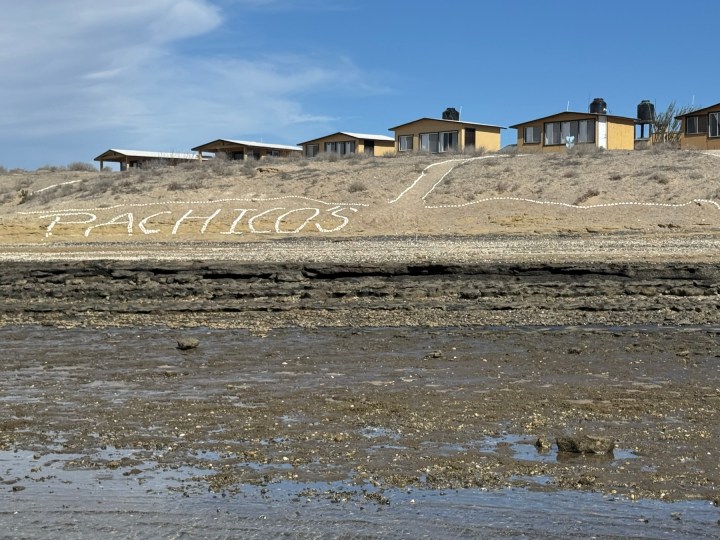
We did their full tour which was a 3 day experience. We did 2 whale watching safari’s per day and stayed in excellent cabins right on the water. There were only 8 guests per panga, making it a very immersive small group experience.
The facilities at Pachico’s are fantastic. There are 7 cabins + a main dining room. Each cabin is solar powered.
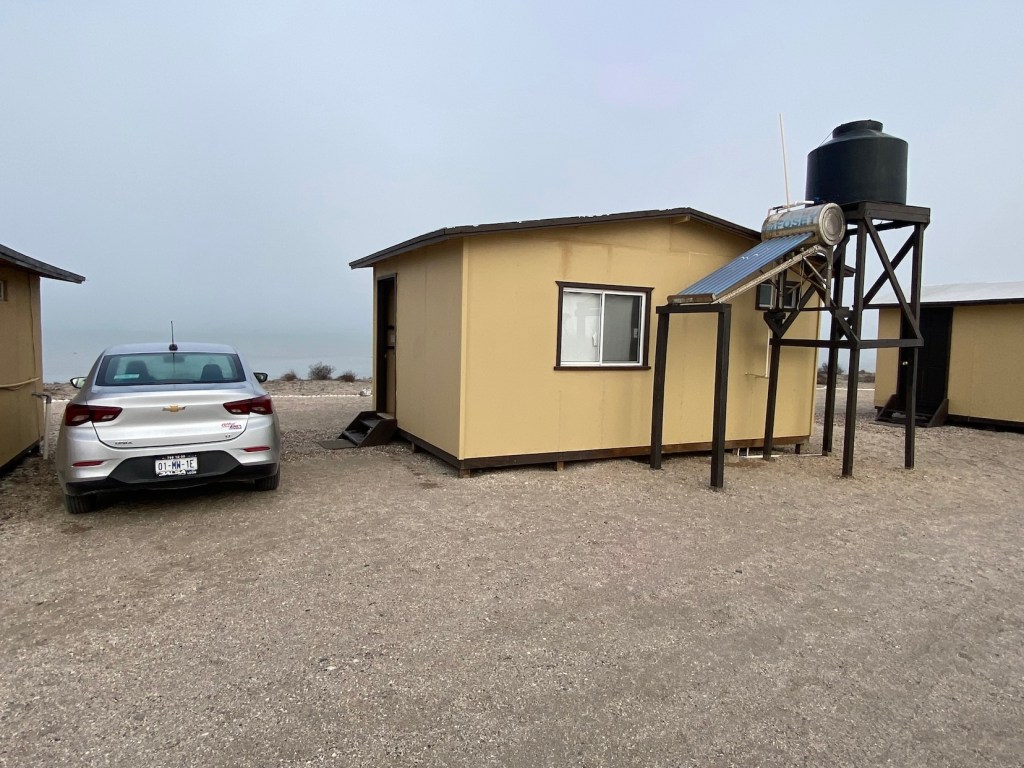
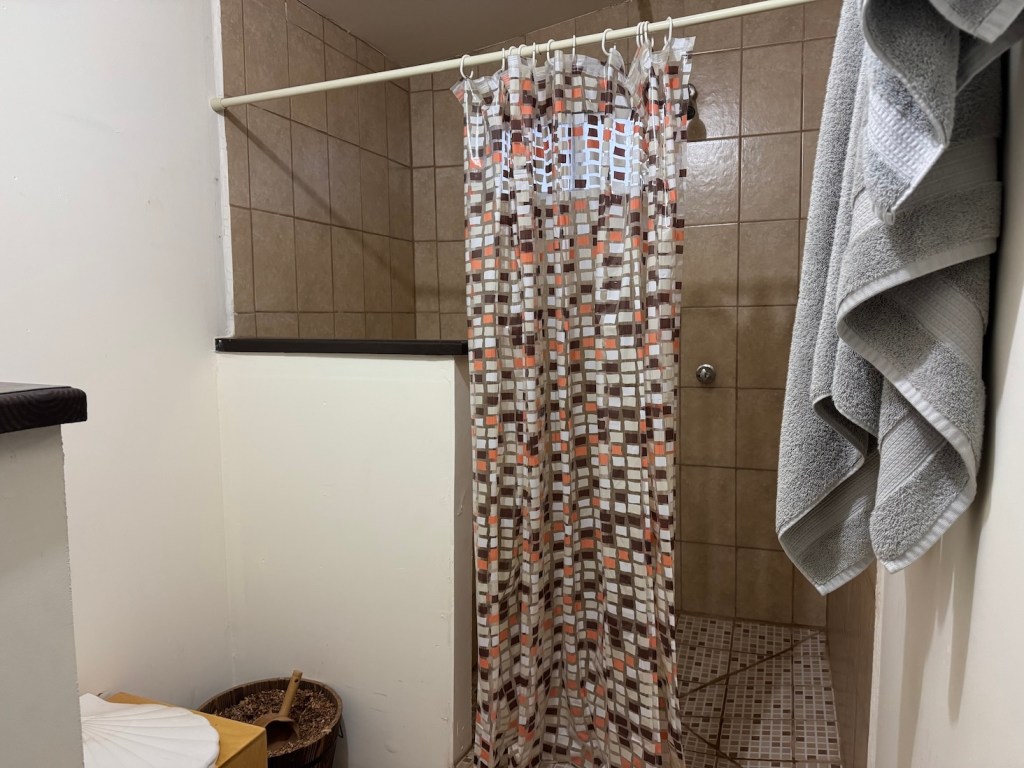

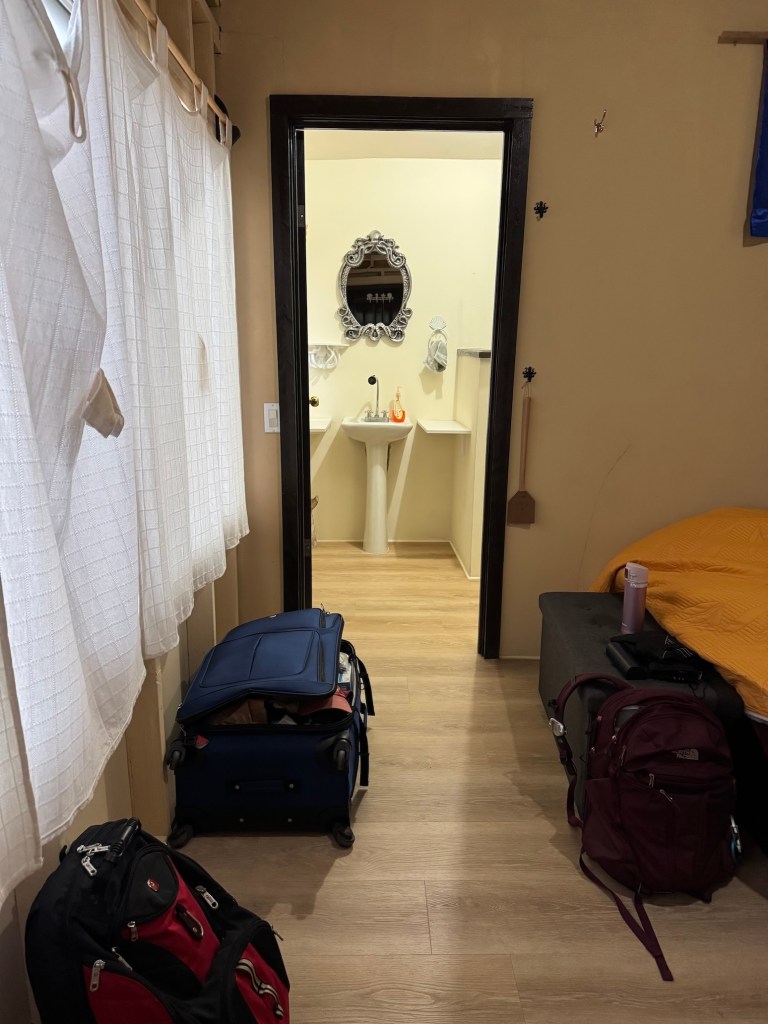
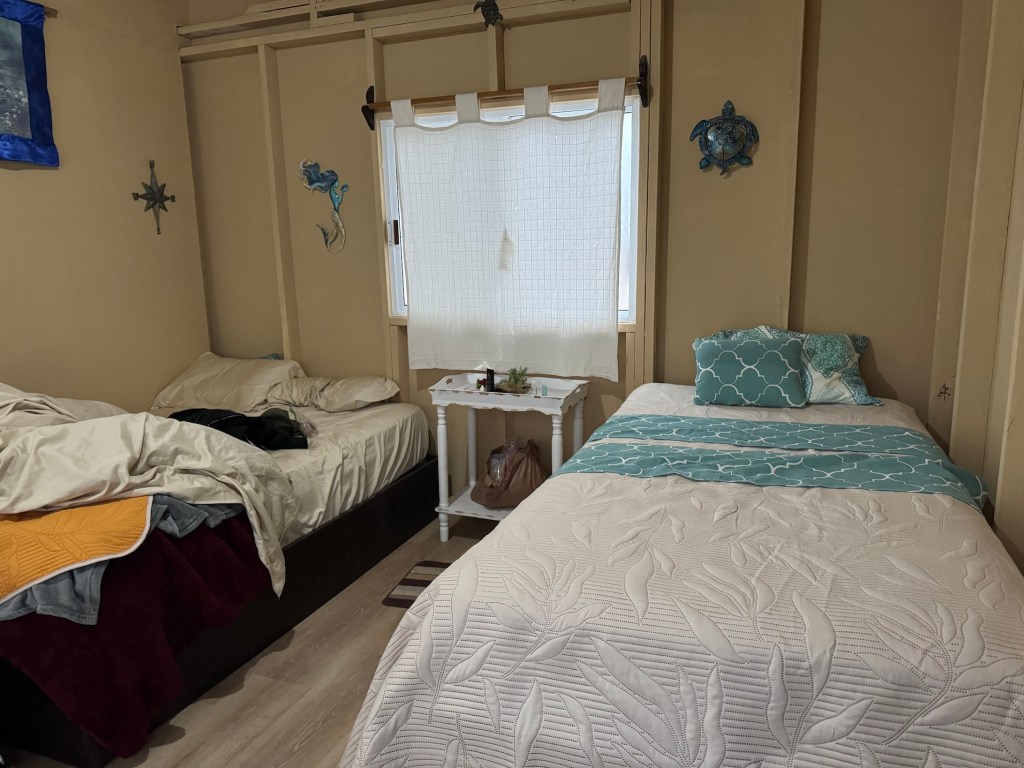
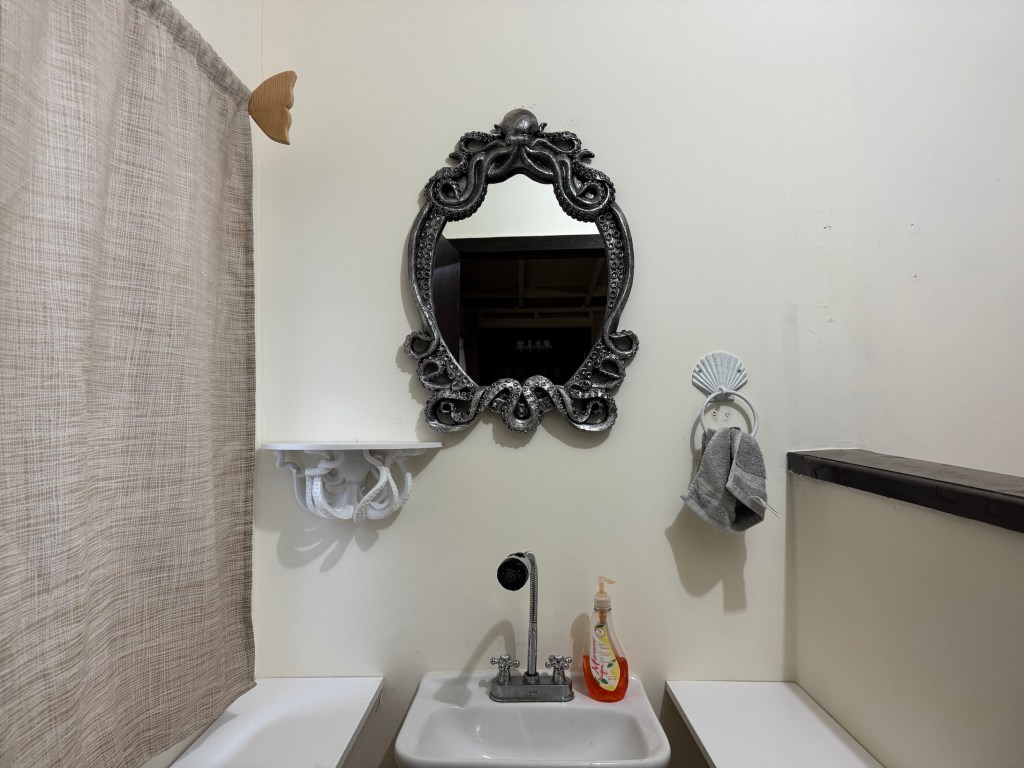
Our cabin (#4) was spacious and had 1 double bed as well as a twin. All of the cabins have an ensuite full bathroom with a shower, composting toilet, a sink and wall mirror. There was hot water whenever we needed it. The big windows face the water which was a great way to wake up every morning.
I went in mid February and it was cold at night and the morning. The room had plenty of blankets. Each cabin has 1 electrical outlet (type A = 2 prong; the same type that we use here in the US, so no adapter needed). BUT if your device requires 3 prongs, bring an adapter. We were able to keep our phones and camera batteries charged in our cabin. I was even able to wash and blow dry my hair one day as well. But I kept it short so as not utilize too much energy.
The main dining cabin has a charging station with some lightning cables.
There is Wifi in the main dining room and it was good Wifi. There was a short stretch where I even had Wifi in the cabin but the signal (if any) would have been stronger in cabins 1-3 closer to the dining room.
Vegan and Vegetarian food. My husband and I are vegan and they prepared thoughtful and delicious meals for us. At many places vegans and vegetarians are an afterthought and not given the same standard of service. That was not the case at Pachico’s. We enjoyed really nice and plentiful meals. I think this was partly due to that one of the guides is vegan so she has been educating them about it.
They served light snacks during happy hour, a large and plentiful, plated dinner, followed by dessert. Where Pachico’s could improve is having better dessert options for vegans.
On the first night we were introduced to the many members of the Pachico family and they were all welcoming and attentive. The arrival day, for most, is a long travel day. Check in is at 4pm. Like most others, we arrived after the 5.5 hour drive from Loreto. We got there around 5pm and were immediately taken to our cabin. Happy hour starts at 4:30pm and we met the other guests. Beer, wine, soda and water were included in the tour fee – any other alcohol was an additional fee.
What I like about Pachico’s is that it’s a small group. There were only 9 of us doing the 3 day tour and we gelled well. They can accommodate people who are camping, staying in a camper van, want to do fewer days etc.
What they provide. They provided plenty of blankets, bath and hand towels, toilet paper in the bathroom, rubber boots and hand soap. Any other toiletries you should bring with you. I wish they had communicated that they’d provide boots as it would have reduced the weight on our packing. We packed our Keens and ended up not even removing them from the suitcase. But more importantly you need to wear socks with the boots to avoid blisters. By chance we had each packed several pairs of socks, otherwise normally when we wear flip flops or Keens we don’t wear socks with them. So again, this is an area where they could do a better job communicating this with guests.
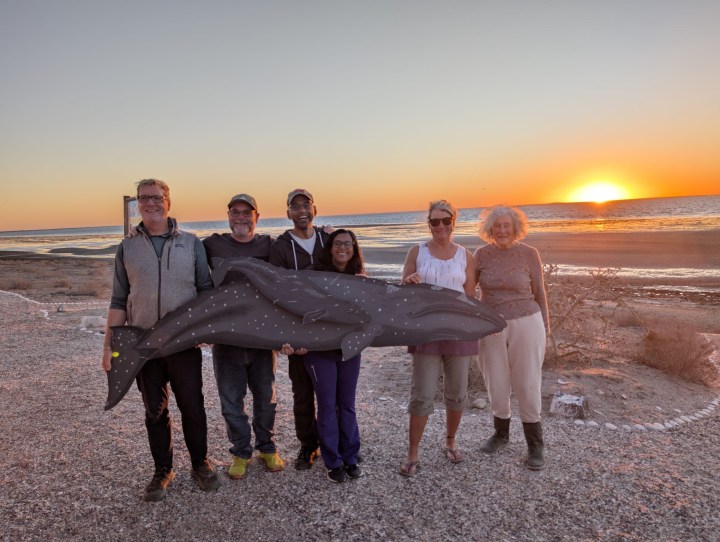
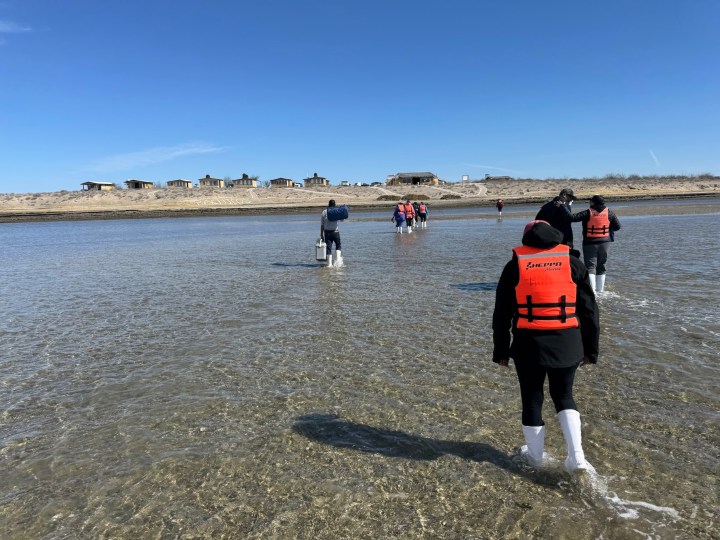
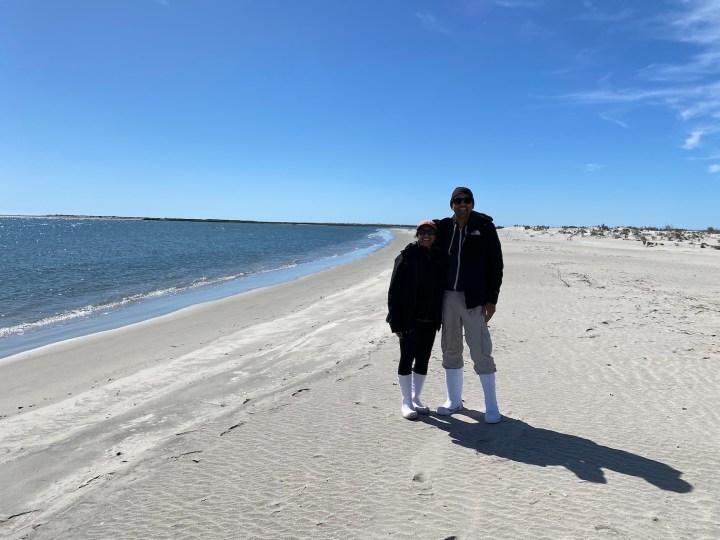
About the rubber boots. I have done wet boat landings before but these were wading landings as you can see in the photo below. Thankfully they provided the boots and we barely got wet. I wore their smallest size (Women’s 5.5) which was too big, but manageable. If I had known, I would have brought my rain boots from home. They don’t have kids boots.
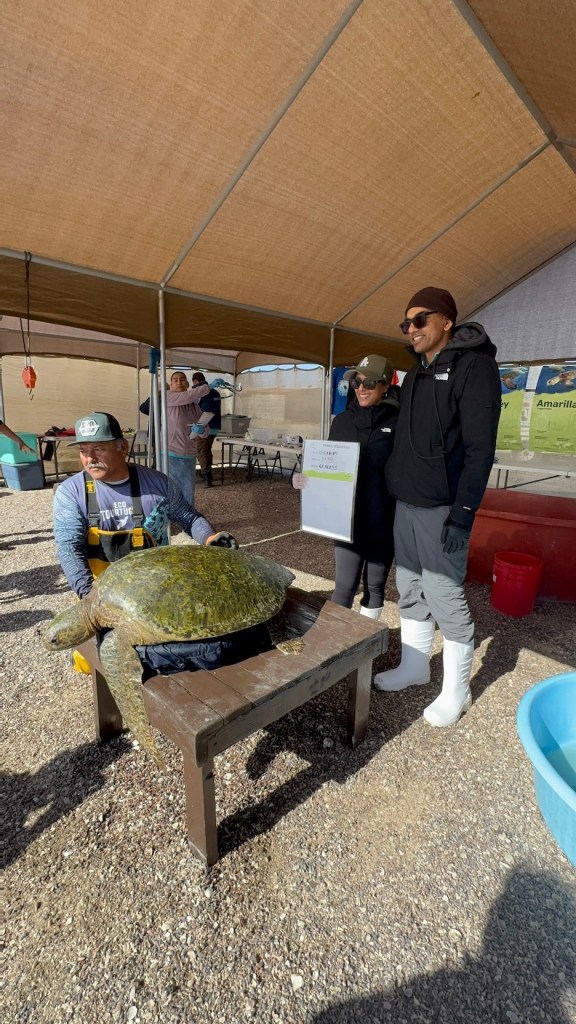
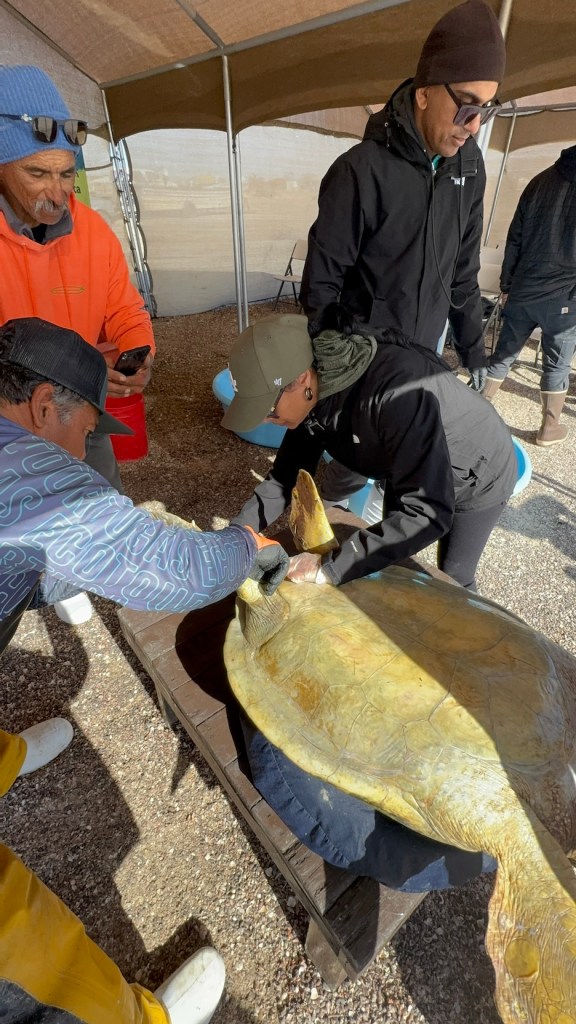
Turtle Tagging Surprise. We had a very pleasant surprise on our trip – sea turtle tagging. Ecotortugas runs a sea turtle conservation program where tourists can weigh, measure, tag and name a sea turtle and release it into the ocean. We named ours Jhiyo and will receive updates about her whereabouts if/whenever she crosses paths with researchers in the future. This was unique and a thrilling first for me. I know there are other sea turtle experiences in other parts of Mexico and across the globe, namely releasing baby sea turtles, but this was completely different.
First, it was only our small group. The intimacy made it was less touristy. We also got hands-on. We measured the turtle and walked it dow to the beach to release it. I didn’t know this was included in our package with Pachico’s so it was a very welcome surprise. And turtle tagging did not replace one of the whale watching safaris – it was in addition to.
I appreciated their nimbleness, as originally we were supposed to go turtle tagging on day 3. But due to the expected high winds in the morning of day 2, they switched the schedule around – which meant that no whale safaris were cancelled. If the winds are too high, making it dangerous to be on the water – they will cancel a safari.
I also appreciated the story of the family that runs Ecotortugas. They transitioned from hunting turtles to their protection and conservation.

Pachico’s Ecotours vs. Others
As I mentioned above, there are a few other companies besides Pachico’s. We really liked Pachico’s – their long family history and how they have been so active in bringing changes in mindset towards whales as well as by partnering with Ecotortugas to protect sea turtles and aid in conservation research.
Pachico’s Ecotours is the furthest camp from the observation area in San Ignacio Lagoon. It took us about 30 minutes, each way, to go from camp to the observation area. I did not mind – it was nice being out on the water. But for someone with a bad back this is something to know/consider as you’ll be sitting on a bench in the panga – with no back support for approximately 4-5 hours each day.
Additionally because Pachico’s is further away from the observation area, we did not return to camp in-between safaris. Some of the other companies take their guests back to camp for lunch. We parked at a beach each day. They provided nice packed lunch. I personally loved that experience. It was fun, adventurous and beautiful. Just know that your bathroom is the bush. They had hand sanitizer and toilet paper.
What A Typical Whale Watching Day Looks Like
A typical whale watching day at Pachico’s Eco Camp went like this:
6:30am the main room/dining room opens and guests can get coffee, tea, juice, cereal.
7:30am hot breakfast is served
8:50am head down to board the pangas
9:20am’ish arrive to the observation area
9:20-10:50am whale watching
10:50am-12pm lunch at a beach
12pm-1:30pm 2nd whale watching safari
2pm back at camp
2pm-4:30pm rest/freshen up
4:30pm happy hour starts
6:30pm sunset
dinner served right after sunset
10pm the dining room closes

What To Wear/Pack For Whale Watching
in San Ignacio Lagoon
In general, pack warm clothes and layers. In the morning when you wake up, it’s cold in your cabin. The floor is cold too – even with socks on. Next time, I’ll pack light slippers to wear around the cabin. I didn’t want to wear my sneakers in the cabin so as not to track mud and dirt onto the floor.
If you have waterproof/water resistant pants take them, but they’re not exactly necessary. For the most part we got a little spray but not really wet. I did happen to get wet – wet one day though as I sat on the bow, instead of the bench, to take photos and a large gulp of water came in as we were moving fast. I dried pretty quickly but I did say to myself, “I shoulda brought my waterproof pants”.
I and most other women wore athletic leggings each day. My husband wore his hiking cargo pants. There were a few people wearing jeans. On top I had a base layer such as a tank top or a thin hoodie, then a fleece followed by an outer layer – waterproof wind breaker/rain jacket with a hood. I wore a baseball cap each day. The hoodie + the jacket’s hood kept my cap in place for the most part, so it wouldn’t go flying off.
With these layers, I stayed warm. I also packed gloves, but I was the only one.
In terms of footwear, as I mentioned, the camp provided that – light rubber boots.
After safari, we went back to the cabin to shower and rest. I packed athletic leggings and long sleeved tops. You’ll want closed toe shoes to wear around the camp – take your sneakers.
Plenty of socks to wear with the rubber boots so that you don’t get blisters.
Ladies, this is a place to wear sports bras.
Also Pack:
Face sunscreen – take it with you on the safaris so you can reapply – it’s a lot of direct sun exposure.
Dry bag, sling or daypack for your essentials to take on the safari. We had a dry bag and I’m glad. We were the only ones that brought a dry bag. The inside of the boat didn’t get wet…but could have.
Water bottle – they had a water station with filtered water.
Hair Care – shower cap, plenty of hair ties, hair brush.
Any Medication
Toiletries – in addition to daily essentials, I packed some face masks. It was a lot of sun exposure each day and the masks were soothing. I like these solid toothpaste tablets, especially when traveling carry-on only.
You will not need make up nor jewelry.
Tech Gear To Pack For Your Trip
Photography. If you have a DSLR or mirrorless camera, TAKE IT. While close whale encounters are more common in San Ignacio lagoon, the fact is you’ll have much more encounters that are not; and having a good zoom is key, not to mention how valuable continuous high speed shooting was on this trip. I am so glad I took mine, otherwise I would not have captured these photos. Moreover, we came VERY close to a friendly whale calf and its mom but unfortunately aggressive behavior from other companies made us turn around. There were too many boats encroaching on them and at one point one company – who I will not name – cut them off. They are NOT supposed to do that.
Our guide, Lisa, was very uncomfortable with the situation and decided to back off from the whales. So I am really glad I took my DSLR so I could capture some of those epic moments that just wouldn’t have come out on an iPhone.
I took my DJI Osmo Gimbal but managing the DSLR as well as the gimbal was too difficult so I ended up not really using it. My husband and I divided and conquered. I focused on photos and he video’d. The few videos I did take came out great because the phone was stabilized by the gimbal.
Batteries and Charging. I didn’t know what to expect in terms of charging phones etc. so we brought our iWalks – which came in handy each day to charge up the phone, while on safari. I purchased an additional external battery pack which I never ended up using.
I took all of the charging gear for the DJI Gimbal and my DSLR. I was able to charge all of that in the cabin because we always travel with our multi port USB bricks which are so handy. Because each cabin had an outlet we didn’t need them at the camp but they were useful for the hotel in Loreto. We also always travel with long charging cables which were very handy in the cabin as well as in hotels/accommodation in general.
Rental cars are a little older there. Whenever we rent a car we travel with our WixGear as well as a USB hub which was really useful for charging each of our phones in the car as well as at the Tijuana airport. Not on this trip but on a recent trip, the USB plug on my plane seat wasn’t working. But I was able to plug the USB hub into my husband’s seat so we were both able to keep our phones charged on the flight.
Loreto Town
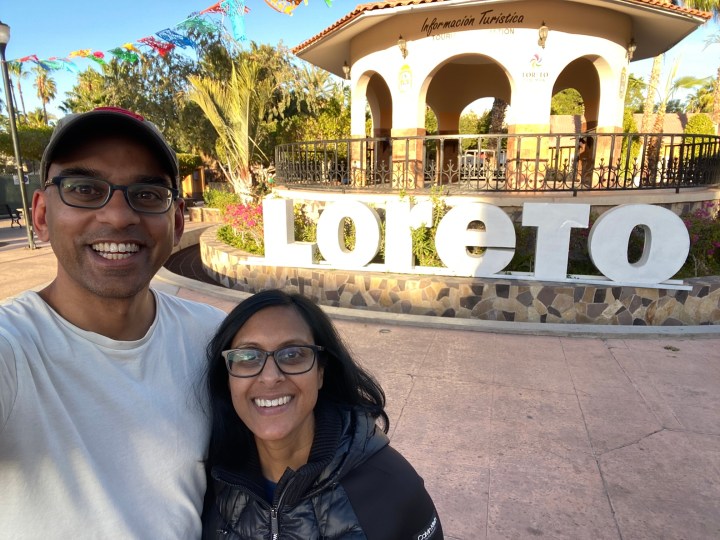
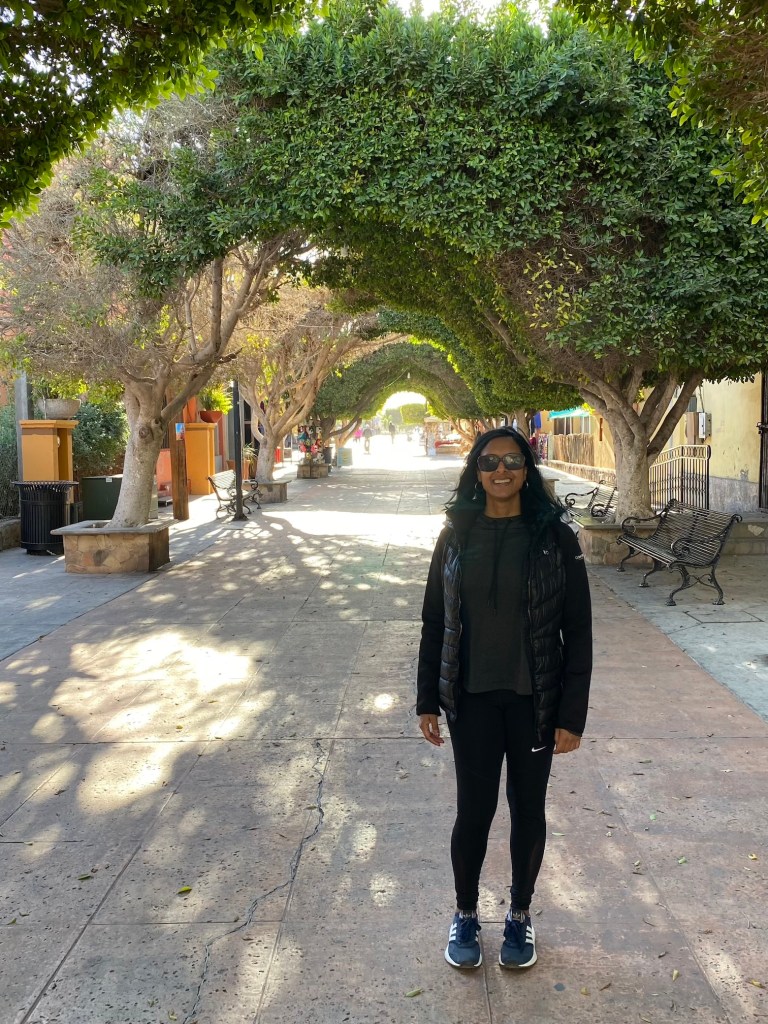
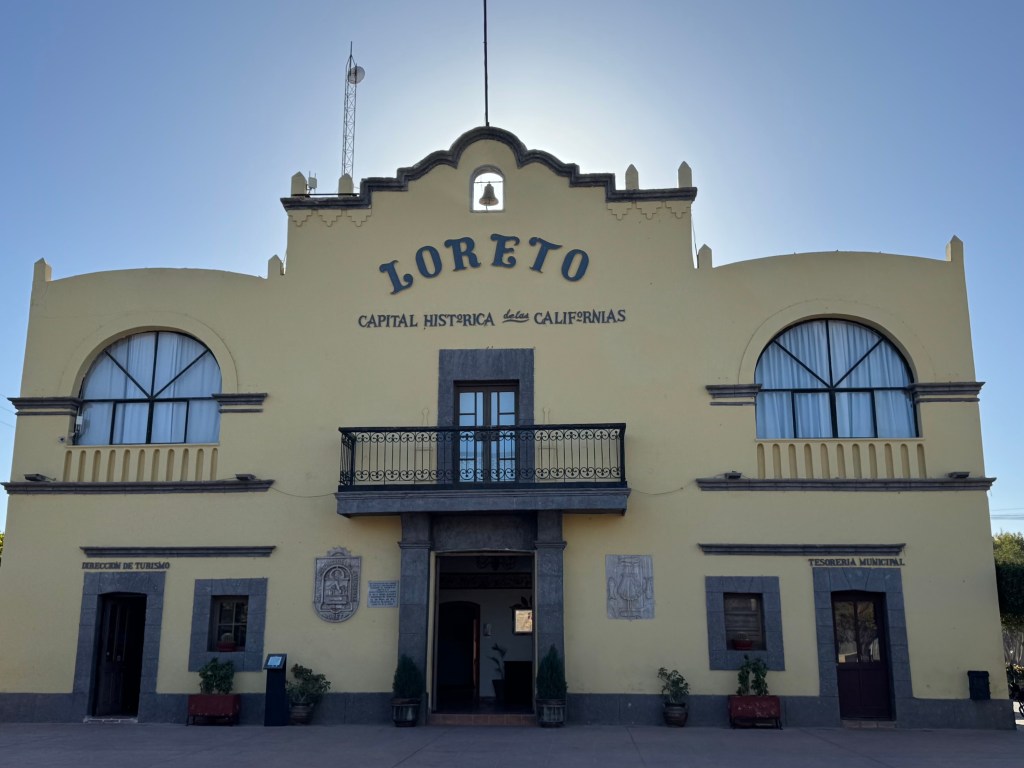
ProTip: Have cash in Mexican Pesos. Many smaller restaurants do not accept credit card. ProTip: in mid February it’s chilly and can be windy. Take your warm layers.
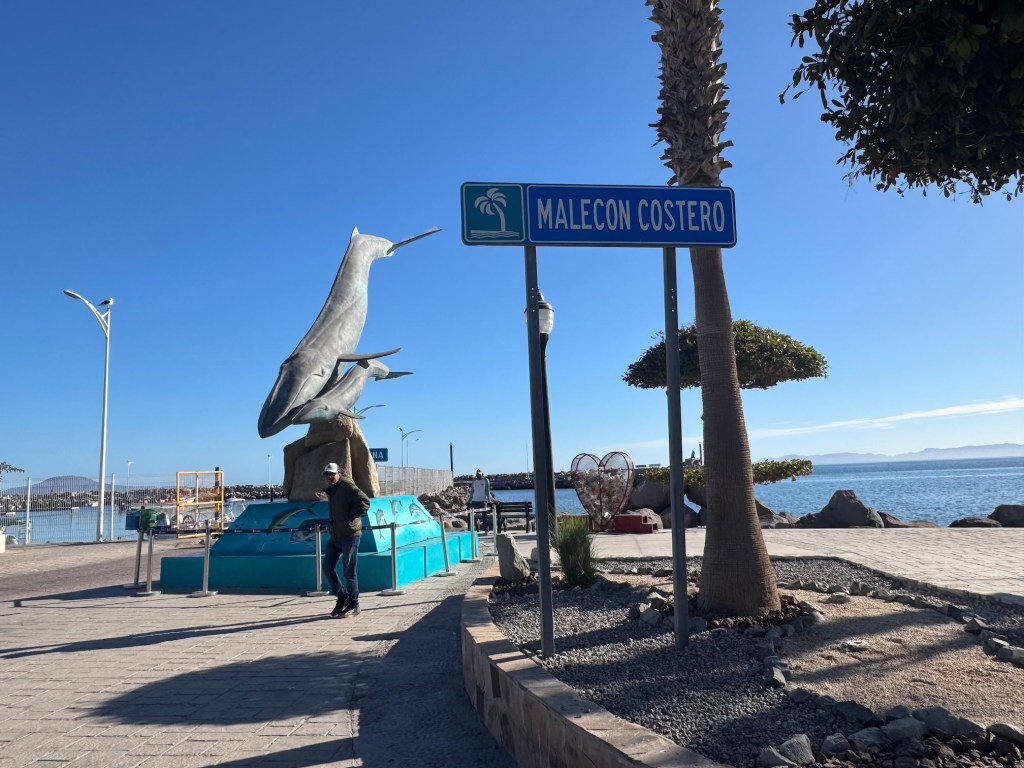
ProTip: Plan to go for a walk along the Malecon (boardwalk). It’s flat and paved.
We flew from Tijuana Airport to Loreto. It was approximately a 1.5 hour flight on Volaris Airline. Cautionary note: there are only few flights to Loreto each week and your flight could get cancelled. Ours was cancelled but we found out about 2 months ahead of time – still we ended up having to add two additional days onto our trip as a result.
Loreto is a quiet and quaint coastal town. It felt like walking in time. The population is 16,000 including many American and Canadian expats. It’s definitely off the beaten path compared to popular destinations in Baja making it a nice place to start or end a holiday there.
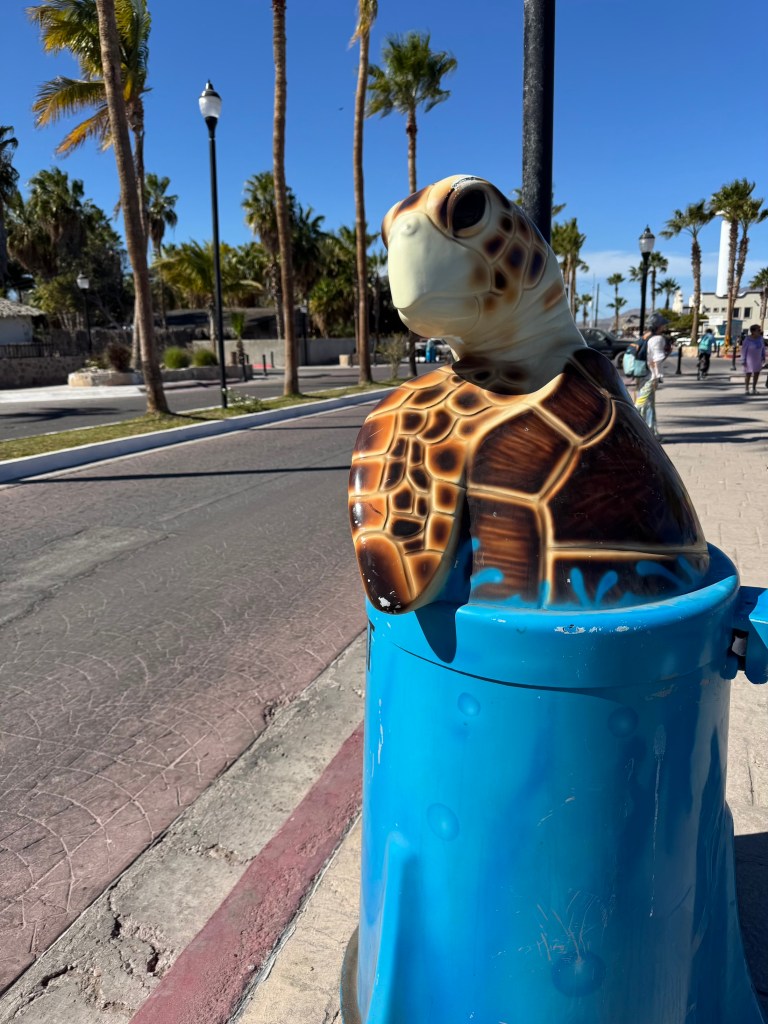
And it definitely caters to tourists. There are a lot of hotels and smaller boutique properties, restaurants, bars and shops selling souvenirs and tours. The Malecon (the boardwalk) is a central feature of town and the best place for a stroll. There were some boatmen hitting us up for tours. A simple “no gracias” was enough.


The Loreto Airport and Car Rental. The airport is tiny. Getting our luggage was easy. Getting the rental car took a while. We pre-booked an SUV but when we arrived they did the bait and switch. They said there were no SUVs available and moved us to a compact car. Additionally when you book they don’t tell you about mandatory insurance so we had to pay a little more. We were a bit disappointed but the main thing was that the car they gave us could handle the unpaved toad on the way to San Ignacio Lagoon. The guy at the counter ensured us it was fine so we went with it.
Food at the Airport. As I said the airport is tiny. There are a couple places to buy snacks but if you’re looking for a vegan or vegetarian or simply looking for. proper meal, I suggest you do what we did and stop at a restaurant in Loreto (Cafe Ole), got takeout and ate it at the airport. I called ahead to place the order – and I speak pretty good Spanish but they didn’t understand so when we got there they had not prepared even started preparing the food – something for you to keep in mind.
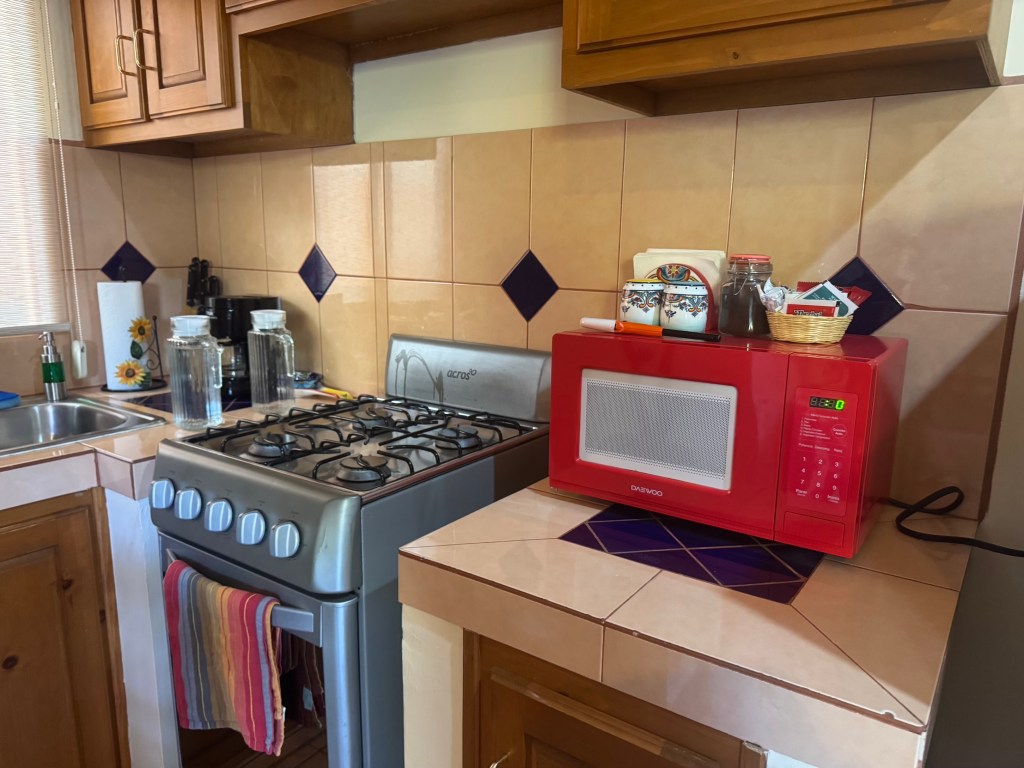
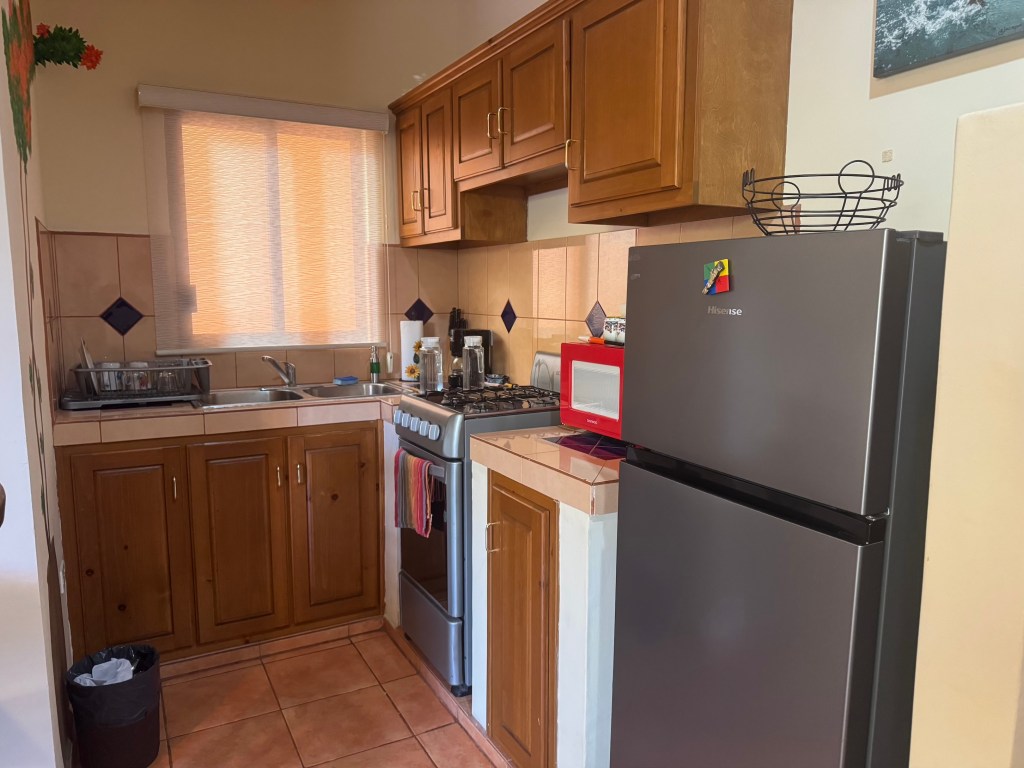
Accommodation in Loreto. We stayed at Casa Mango, a boutique hotel right in downtown. It’s two stories with rooms surrounding an inviting courtyard. Our room had a small but full kitchen – 4 burner stove, refrigerator and it’s nice that the shower and toilet are separate. We were able to use our Netflix account on the small TV and WiFi was really good.
The electrical outlets were the same as the US, so no adapter needed and in Mexico electricity is 127v so most US appliances work – no worries.
The staff were friendly. It helps if you know Spanish. The hotel was within a 10 minute, flat walk to everything – shops, restaurants and the jetty – the Malecón, a popular area for strolling and enjoying views of the water.
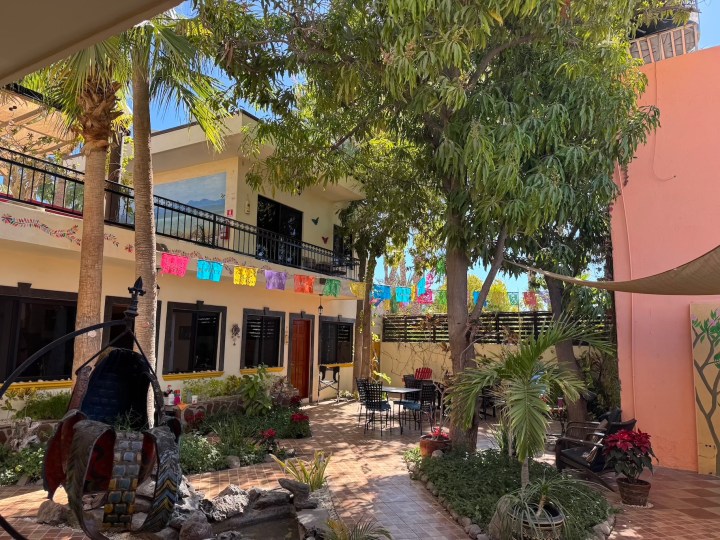
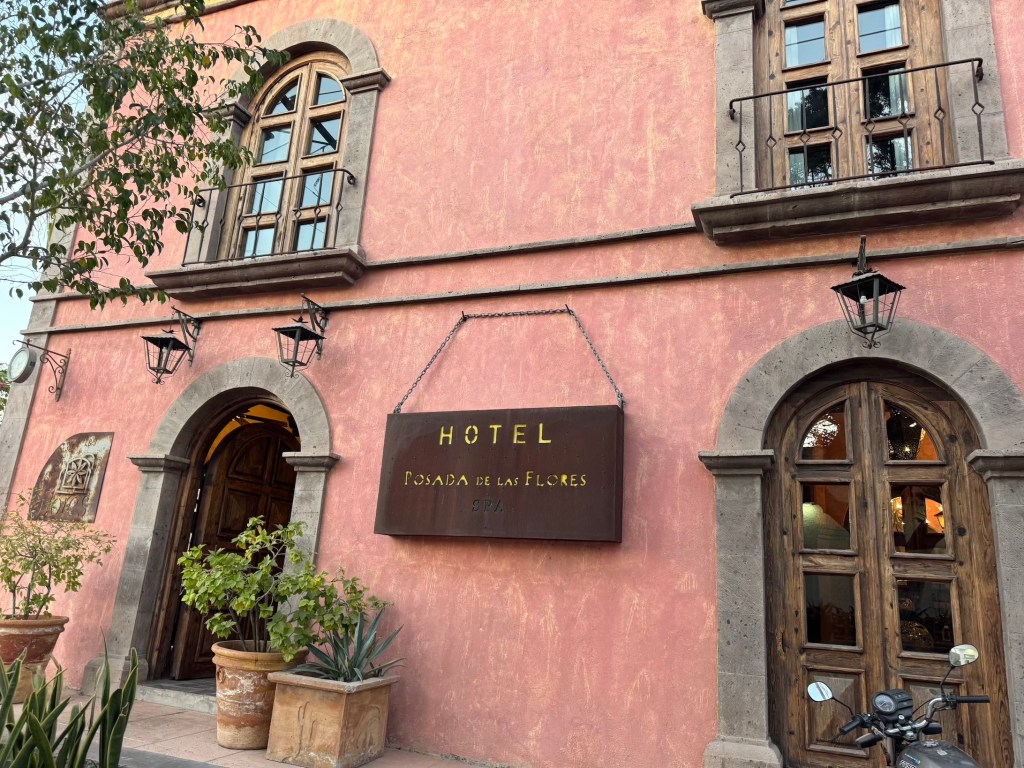
The other hotels I looked at were Posadas de Las Flores and Oasis Loreto. Posadas de Las Flores is literally in the main square of town and looked really nice. I didn’t choose it due to some of the reviews. Oasis is a fancy resort on the main boardwalk with views of the Sea of Cortez. I didn’t choose this resort because of the negative reviews about the WiFi. WiFi was critical for us as we were working on the extra day in Loreto.
There are a number of hotels on the boardwalk. If you plan to book one of those, pay extra attention to whether the harbor blocks any of the views as you will be disappointed if it does. What I observed is that the south end of the boardwalk (closer to Oasis Resort) had nicer hotels.
Vegan and Vegetarian Food in Loreto. We ate at Cafe Ole 3 x during our total of 2 days in Loreto. It’s adjacent to Posadas de Las Flores Hotel — so right in the main town square. It’s a family run business with big portions.
They serve Mexican cuisine in a homemade style. They have a separate vegan and vegetarian menu. By default a lot of dishes are vegan. For example you can get a burrito without cheese – loaded with veggies. They didn’t put the beans inside the burrito so it was literally loaded with veggies only and tasty. I ordered rice and vegetables and my husband got a burrito and we shared. The portions are big.
We paid with cash.

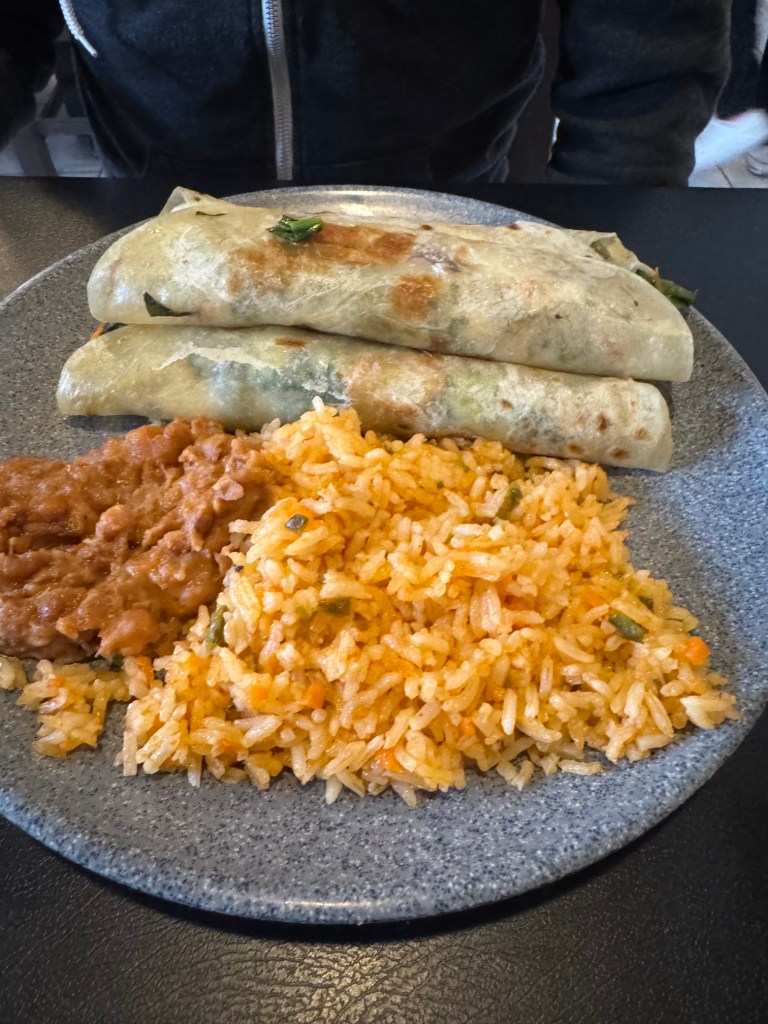
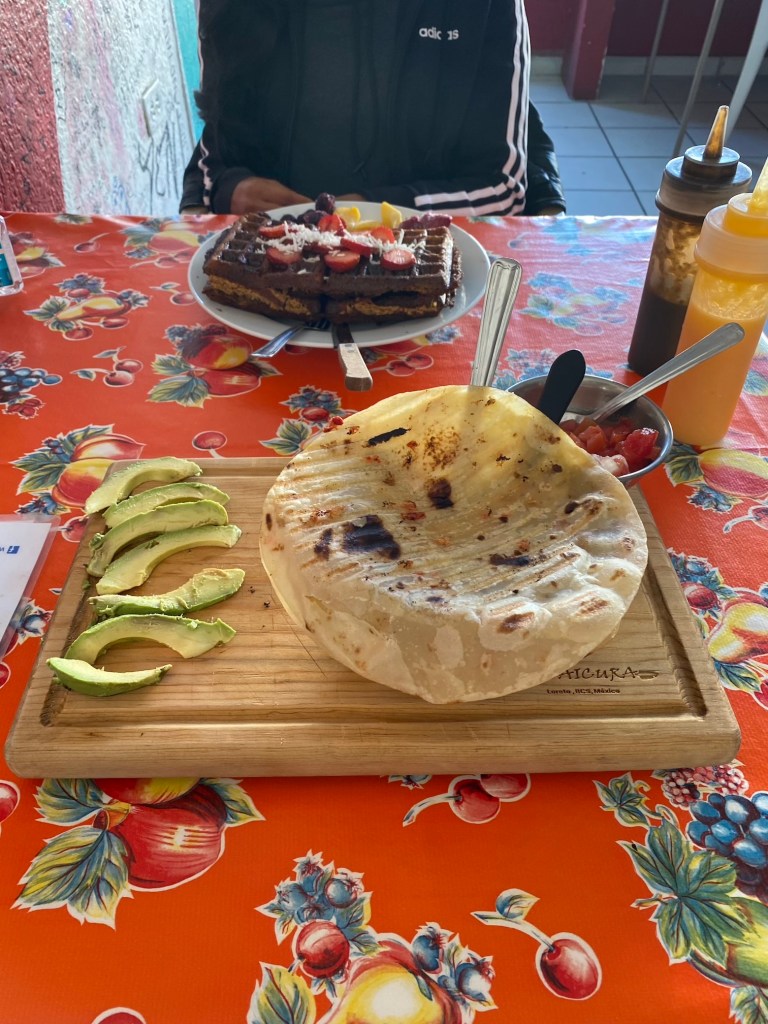
Waicura is 100% vegan and operated by the friendly, super cool, cultured and VERY talkative Andres. We ordered the flour tortillas with soy chorizo and the signature waffles with fruit. Everything was freshly made by Andres. The menu is pretty large and he has freshly baked breads and sweets and chocolates that he makes himself for sale. We bought some for the long drive to San Ignacio Lagoon.
If you plan to eat here, make sure you have time. It’s kinda like island time at this restaurant. Breakfast was about 2 hours as Andres stops a lot to chat with you while preparing the food. We paid in Mexican Pesos and left the restaurant, not noticing we left our hand sanitizer on the table. He came running after us to return it which gives you a sense of what a nice person he is and the feel of this town.

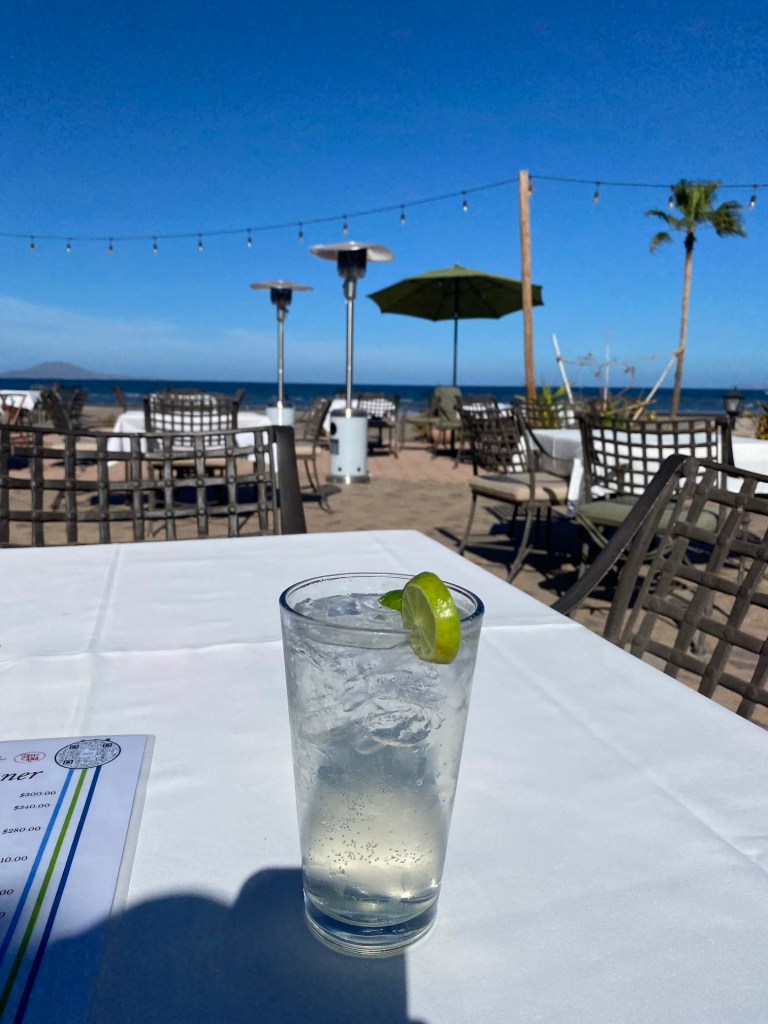
Oasis Resort. We went to Oasis Resort around 2pm for an afternoon snack. We ordered French Fries and a couple cocktails. They don’t have many vegan nor vegetarian options on the menu. They didn’t even have French Fries, but we just asked for it. It was a nice place to sit outside with Sea views. In mid February it was a little chilly. I actually moved my seat to sit in the sun as I got a little chilly and I was glad I had my warm layer.
Whale Watching in Loreto. This was not easy to arrange. I ended up not being able to go for a couple of reasons.
1. I wanted a tour for me only. My husband was working on our full day in Loreto so he could not go – and the companies don’t like bookings for 1 person.
2. It was last minute. Again with only 1 person they all said, they’ get back to me as to whether they would be doing a tour. It’s not peak season in February so it depended on whether they got more bookings.
3. I tried booking with the agencies – both ahead of time as well as while I was there. There’s Wild Loreto, Loreto Sea and Land Tours and more. These are small companies so do not expect great communication. Even trying to book online was difficult. What I could have done, if I REALLY wanted to go, is go down to the harbor as there are so many guys approaching tourists to take them on tours. Of course the challenge with that is there’s 0 quality control. And I was alone – my husband was not going with me – so I decided against that option.
February and March are peak season for Blue Whales in the waters outside of Loreto.
I hope this guide on whale watching in San Ignacio Lagoon as well as Loreto is useful as you plan your trip.
Wishing you happy and safe travels!















 Passport Pages